
April 25, 2024
Come on a journey through the lush green landscapes of Sri Lanka
as we unravel the story of rubber plantations. From their
historical roots to the innovative techniques shaping the
industry today, we’ll explore how these plantations have
become a vital part of the country’s economy. Learn about
the sustainable practices and community impact championed by
Lalan Rubber, and discover the fascinating
interplay between tradition and modernity in Sri Lanka’s
rubber industry.
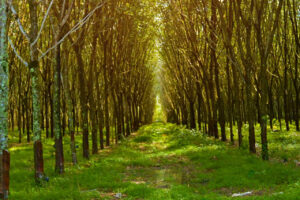 The Story of Rubber Tree Plantations in Sri Lanka
Rubber tree plantations in Sri Lanka have their origins in the
colonial era, tracing back to the 1870s when the coffee
plantations were devastated by blight. In the wake of this
crisis, various experiments were undertaken to find alternative
crops suitable for cultivation. Eventually, Sri Lanka, known
then as Ceylon, was chosen by the colonial office as an ideal
location for rubber cultivation due to its favorable
geographical features and climate. Under the guidance of George
Thwaites, seedlings were planted at the botanical garden in
Gampaha. The first rubber tree in Ceylon blossomed in 1881,
marking the beginning of rubber cultivation in the country.
Subsequent efforts focused on experimenting with tapping
techniques to extract rubber from the trees. By 1893,
approximately 90,000 rubber seeds were distributed to planters
across Ceylon. The cultivation of rubber expanded rapidly, with
around 180,085 hectares dedicated to rubber plantations by 1923.
Thus, the journey of rubber cultivation commenced in Sri Lanka,
evolving into one of the nation’s primary agricultural
commodities over time.
Who Brought Rubber Trees to Sri Lanka?
In the colonial era, Sir Joseph Hooker played a pivotal role in
initiating rubber tree cultivation in Sri Lanka. Acting on his
recommendation, 38 cases containing 1919 rubber seedlings were
dispatched from Kew Gardens to Ceylon. This significant
contribution solidifies Joseph Hooker’s legacy as the
trailblazer behind the introduction of rubber plantations in Sri
Lanka.
Where Can You Find Rubber Trees in Sri Lanka?
In Sri Lanka, rubber cultivation thrives in the tropical
lowlands of the wet zone, typically below an altitude of 1400
feet. The size of rubber holdings varies considerably,
categorized into two main types based on land usage.
Smallholders manage plots under 8 hectares, while larger
plantations, termed estates, encompass 8 hectares or more. With
a total land area of 127,500 hectares, Sri Lanka’s rubber
plantations are predominantly concentrated in the wet zone. Key
rubber-growing districts include Kegalle, Gampaha, Rathnapura,
Kalutara, Colombo, Galle, Matara, Kandy, Matale, and Kurunegala.
Additionally, rubber trees are cultivated in intermediate zone
districts. Presently, approximately 68,000 hectares of rubber
plantations are privately owned, while 19 regional plantation
companies oversee around 47,000 hectares of rubber land. Of the
total 115,300 hectares, roughly 25,700 hectares are immature,
leaving 89,600 hectares mature. Traditionally confined to the
wet zone, rubber cultivation expanded with the introduction of
drought-resistant rubber clones by the Rubber Research Institute
of Sri Lanka. Consequently, rubber tree planters began
cultivating rubber in dry zone districts like Monaragala.
Rubber production in Sri Lanka
Once ranked as the world’s fourth-largest rubber producer,
Sri Lanka has witnessed a transformation in its rubber industry
over time, with the country’s role extending beyond raw
rubber output, encompassing a diverse array of value-added
products derived from natural rubber. These include,
The Story of Rubber Tree Plantations in Sri Lanka
Rubber tree plantations in Sri Lanka have their origins in the
colonial era, tracing back to the 1870s when the coffee
plantations were devastated by blight. In the wake of this
crisis, various experiments were undertaken to find alternative
crops suitable for cultivation. Eventually, Sri Lanka, known
then as Ceylon, was chosen by the colonial office as an ideal
location for rubber cultivation due to its favorable
geographical features and climate. Under the guidance of George
Thwaites, seedlings were planted at the botanical garden in
Gampaha. The first rubber tree in Ceylon blossomed in 1881,
marking the beginning of rubber cultivation in the country.
Subsequent efforts focused on experimenting with tapping
techniques to extract rubber from the trees. By 1893,
approximately 90,000 rubber seeds were distributed to planters
across Ceylon. The cultivation of rubber expanded rapidly, with
around 180,085 hectares dedicated to rubber plantations by 1923.
Thus, the journey of rubber cultivation commenced in Sri Lanka,
evolving into one of the nation’s primary agricultural
commodities over time.
Who Brought Rubber Trees to Sri Lanka?
In the colonial era, Sir Joseph Hooker played a pivotal role in
initiating rubber tree cultivation in Sri Lanka. Acting on his
recommendation, 38 cases containing 1919 rubber seedlings were
dispatched from Kew Gardens to Ceylon. This significant
contribution solidifies Joseph Hooker’s legacy as the
trailblazer behind the introduction of rubber plantations in Sri
Lanka.
Where Can You Find Rubber Trees in Sri Lanka?
In Sri Lanka, rubber cultivation thrives in the tropical
lowlands of the wet zone, typically below an altitude of 1400
feet. The size of rubber holdings varies considerably,
categorized into two main types based on land usage.
Smallholders manage plots under 8 hectares, while larger
plantations, termed estates, encompass 8 hectares or more. With
a total land area of 127,500 hectares, Sri Lanka’s rubber
plantations are predominantly concentrated in the wet zone. Key
rubber-growing districts include Kegalle, Gampaha, Rathnapura,
Kalutara, Colombo, Galle, Matara, Kandy, Matale, and Kurunegala.
Additionally, rubber trees are cultivated in intermediate zone
districts. Presently, approximately 68,000 hectares of rubber
plantations are privately owned, while 19 regional plantation
companies oversee around 47,000 hectares of rubber land. Of the
total 115,300 hectares, roughly 25,700 hectares are immature,
leaving 89,600 hectares mature. Traditionally confined to the
wet zone, rubber cultivation expanded with the introduction of
drought-resistant rubber clones by the Rubber Research Institute
of Sri Lanka. Consequently, rubber tree planters began
cultivating rubber in dry zone districts like Monaragala.
Rubber production in Sri Lanka
Once ranked as the world’s fourth-largest rubber producer,
Sri Lanka has witnessed a transformation in its rubber industry
over time, with the country’s role extending beyond raw
rubber output, encompassing a diverse array of value-added
products derived from natural rubber. These include,
RUBBER PLANTATIONS IN SRI LANKA
The Story of Rubber Tree Plantations in Sri Lanka
Rubber tree plantations in Sri Lanka have their origins in the
colonial era, tracing back to the 1870s when the coffee
plantations were devastated by blight. In the wake of this
crisis, various experiments were undertaken to find alternative
crops suitable for cultivation. Eventually, Sri Lanka, known
then as Ceylon, was chosen by the colonial office as an ideal
location for rubber cultivation due to its favorable
geographical features and climate. Under the guidance of George
Thwaites, seedlings were planted at the botanical garden in
Gampaha. The first rubber tree in Ceylon blossomed in 1881,
marking the beginning of rubber cultivation in the country.
Subsequent efforts focused on experimenting with tapping
techniques to extract rubber from the trees. By 1893,
approximately 90,000 rubber seeds were distributed to planters
across Ceylon. The cultivation of rubber expanded rapidly, with
around 180,085 hectares dedicated to rubber plantations by 1923.
Thus, the journey of rubber cultivation commenced in Sri Lanka,
evolving into one of the nation’s primary agricultural
commodities over time.
Who Brought Rubber Trees to Sri Lanka?
In the colonial era, Sir Joseph Hooker played a pivotal role in
initiating rubber tree cultivation in Sri Lanka. Acting on his
recommendation, 38 cases containing 1919 rubber seedlings were
dispatched from Kew Gardens to Ceylon. This significant
contribution solidifies Joseph Hooker’s legacy as the
trailblazer behind the introduction of rubber plantations in Sri
Lanka.
Where Can You Find Rubber Trees in Sri Lanka?
In Sri Lanka, rubber cultivation thrives in the tropical
lowlands of the wet zone, typically below an altitude of 1400
feet. The size of rubber holdings varies considerably,
categorized into two main types based on land usage.
Smallholders manage plots under 8 hectares, while larger
plantations, termed estates, encompass 8 hectares or more. With
a total land area of 127,500 hectares, Sri Lanka’s rubber
plantations are predominantly concentrated in the wet zone. Key
rubber-growing districts include Kegalle, Gampaha, Rathnapura,
Kalutara, Colombo, Galle, Matara, Kandy, Matale, and Kurunegala.
Additionally, rubber trees are cultivated in intermediate zone
districts. Presently, approximately 68,000 hectares of rubber
plantations are privately owned, while 19 regional plantation
companies oversee around 47,000 hectares of rubber land. Of the
total 115,300 hectares, roughly 25,700 hectares are immature,
leaving 89,600 hectares mature. Traditionally confined to the
wet zone, rubber cultivation expanded with the introduction of
drought-resistant rubber clones by the Rubber Research Institute
of Sri Lanka. Consequently, rubber tree planters began
cultivating rubber in dry zone districts like Monaragala.
Rubber production in Sri Lanka
Once ranked as the world’s fourth-largest rubber producer,
Sri Lanka has witnessed a transformation in its rubber industry
over time, with the country’s role extending beyond raw
rubber output, encompassing a diverse array of value-added
products derived from natural rubber. These include,
- Rubber gloves,
- Rubber bands, Latex mattresses,
- Mattress toppers,
- Pillows,
- Solid tires,
- And, Footwear.